
Call Anytime

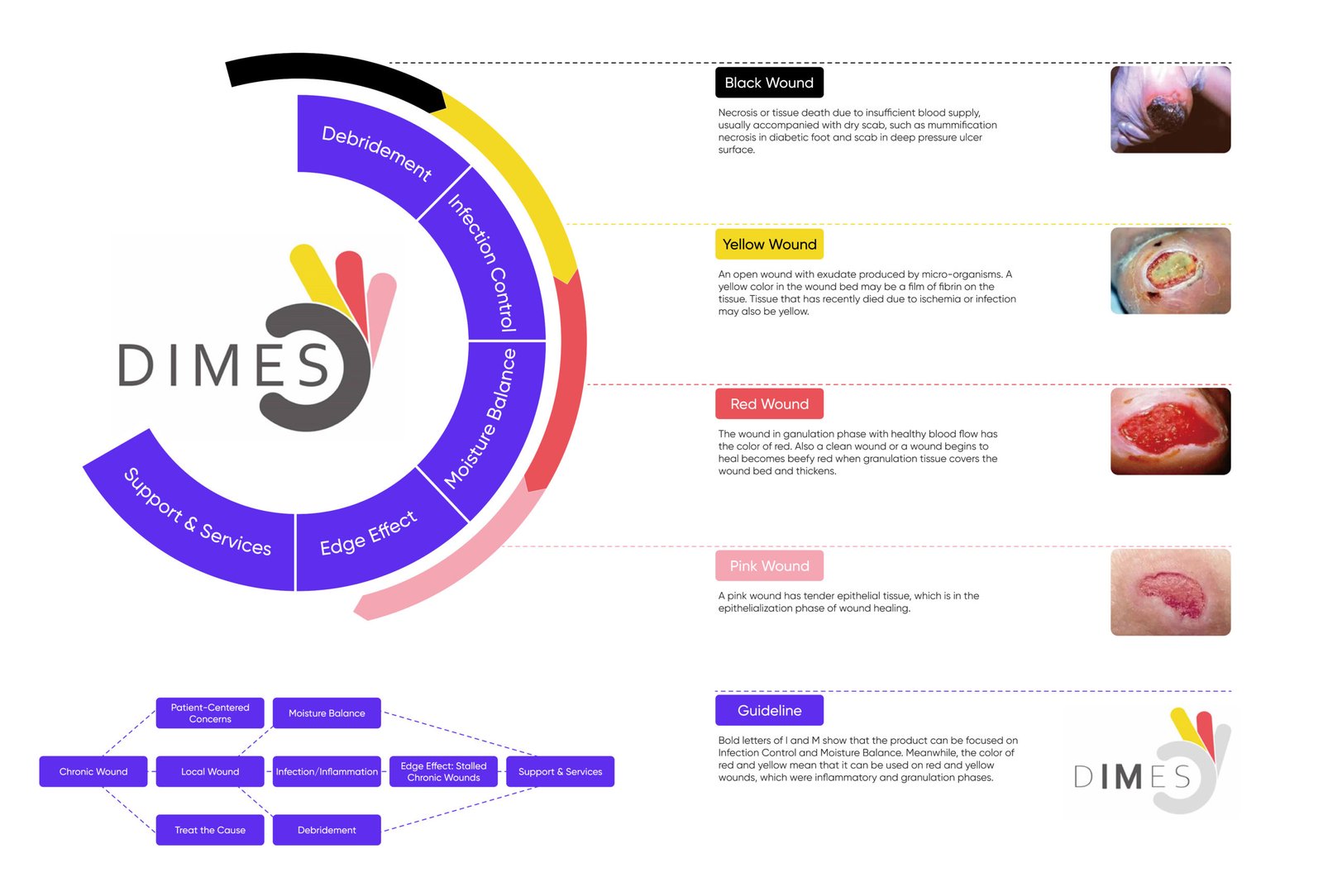
DIMES is a nursing principle that effectively promotes wound healing after clinical practice. It is a set of principles that do not represent the order and need to consider all clinical nursing factors. Through debridement, wound bed preparation, infection control, moisture balance, it is almost possible to diagnose and cure most of the wounds. If all this still doesn't work, we need to consider edge effects or give other support.
Debridement
Debridement is the removal of viable (living) and non-viable wound components, including necrotic tissue, slough, microorganisms, biofilm, extracellular polymeric substance (EPS) and foreign materials.
Infection Control
The presence of infection, localized or systemic, impedes wound healing. Infection occurs when microbial burden exceeds the host’s defense mechanisms, progressing along a continuum from contamination and colonization to local infection and, if untreated, systemic involvement. Microorganisms interact with chronic wounds at varying levels, influencing the wound environment and the overall trajectory of healing.
Moisture Balance
Assess whether the wound environment is excessively dry or overly moist. Research by Dr. George Winter in the 1960s established that maintaining optimal moisture balance is critical to effective wound healing, forming the foundation of modern moist wound healing principles. A desiccated (dry) wound bed may impair cellular activity and delay healing, indicating the need for moisture-donating interventions. Conversely, excessive moisture as evidenced by maceration of the wound edges and periwound tissue, can compromise skin integrity and should be managed with absorptive dressings appropriate for moderate to heavy exudate.
Edge Effect
Evaluation of wound edge progression is a critical component of wound assessment. Healthy wound edges are typically well-approximated, open, and demonstrate evidence of epithelial cell migration and contraction. In contrast, stalled or non-advancing edges may indicate suboptimal wound management. Contributing factors, particularly in wounds with tunneling or undermining, include the development of epibole (rolled edges), can impede epithelialization and delay closure. Appropriate management of dead space is essential. This would include the use of suitable wound fillers or packing materials to support the wound bed, prevent premature surface closure, and promote uniform granulation. When dead space is adequately addressed, wound edges are more likely to progress with normal migration and contraction, supporting optimal healing outcomes.
Support & Services
Comprehensive wound care support includes routine supplies (e.g., skin prep, silicone tape, silicone contact layer), compression systems (kits and stockings), advanced dressings, and therapeutic modalities. Care is delivered through a holistic, patient-centered approach with integrated clinical support and ongoing education for patients and providers.
Making Advanced Wound Care Easy

We work with a passion of taking challenges and creating new ones in advertising sector.
Newsletter
Signup for our latest news & articles. We won’t give you spam mails.
© All Copyrights Reserved 2025