
SILICONE WOUND CONTACT LAYER
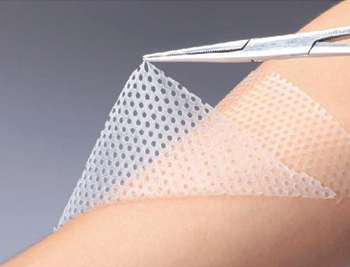
The CuraSil™ Silicone Contact Dressing is a soft, open‑mesh wound contact layer designed to allow exudate to pass through to a secondary dressing while protecting the wound and surrounding skin.
Key Features:
- Gentle, Non-Adherent Silicone Contact Layer: Soft silicone design minimizes trauma and does not stick to the wound bed, helping reduce pain during dressing changes.
- Open Mesh Structure: Allows exudate to pass freely to a secondary absorbent dressing for effective fluid management.
- Flexible & Conformable: Easily adapts to body contours and movement, maintaining consistent contact with the wound.
- Compatible with Advanced Therapies: Can be used with secondary dressings, hydrogels, and negative pressure wound therapy (NPWT).
Available Sizes

Mechanism of Action:
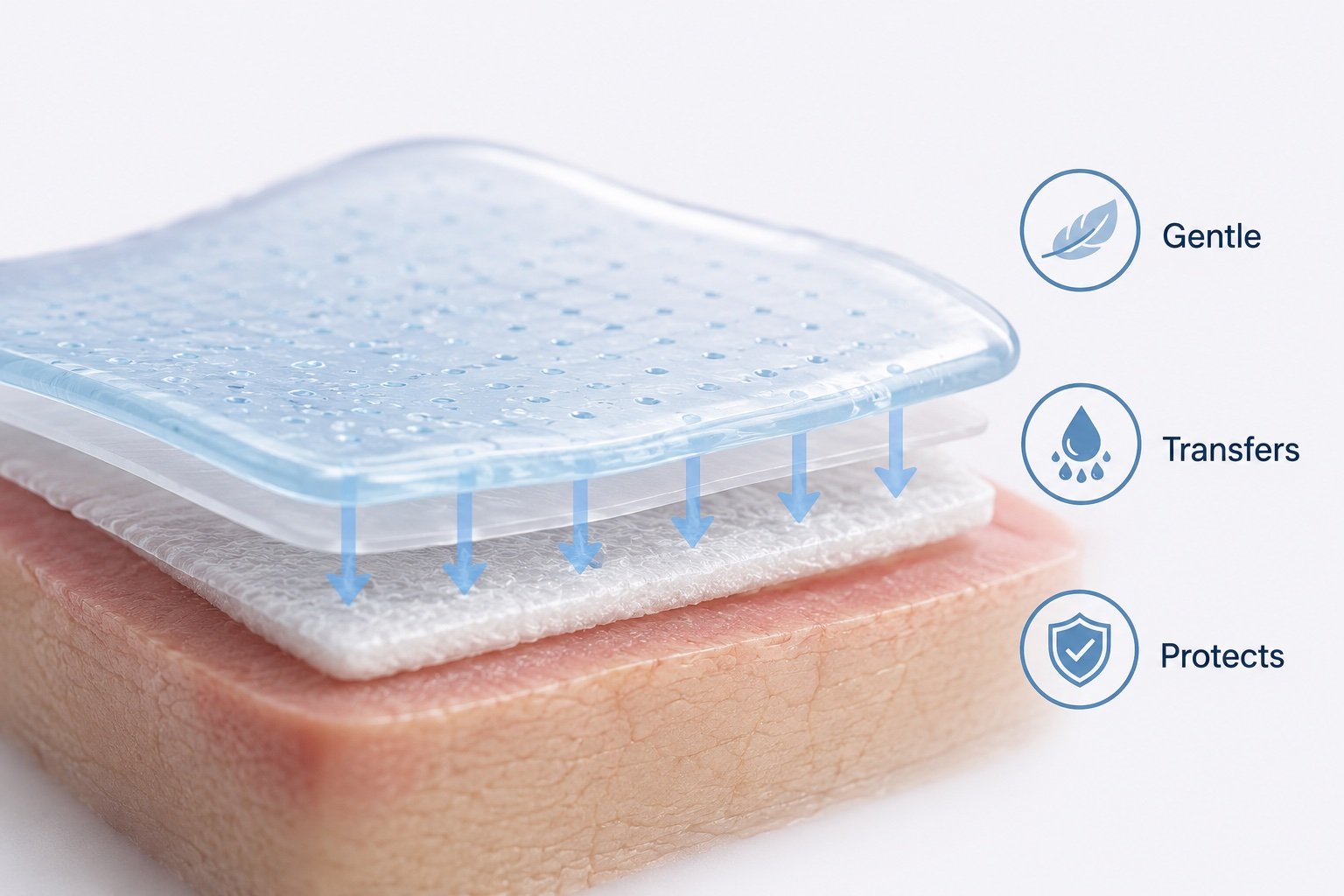
CuraSil™ has a soft silicone technology that creates gentle adherence to intact peri-wound skin without adhering to the moist wound bed. Its perforated contact layer allows exudate to pass through to a secondary dressing, helping to minimize trauma, pain, and disruption of newly formed tissue during dressing changes. The dressing supports a moist wound healing environment while protecting granulation tissue, drawing on proven advancements in atraumatic wound contact design.
Indications:
CuraSil™ Silicone Contact Dressing is intended for the management of wounds, including:
- Pressure ulcers
- Diabetic ulcers
- Venous/arterial leg ulcers
- Post-surgical wounds
- Donor sites
- Skin abrasions
- Burns (1st and 2nd degree)
Contraindications:
- Patients with known sensitivity to silicone rubber
Instructions for Use:
1. Clean the wound with sterile saline water and dry surrounding skin gently.
2. Select an appropriately sized dressing, larger than the wound to ensure contact with the skin.
3. Remove the release films and apply the adherent side to the wound. Do not stretch. The dressing should overlap the surrounding skin by at least 1-2 cm for the smaller sizes and 5cm for the larger sizes.
4. Remove the protector material from one side of the product and anchor the adhesive side to the skin.
5. Smooth the product over the wound and remove the remaining protector material. If more than one piece of the dressing is required, overlap the dressing, making sure that the holes are not blocked.
6. Apply a secondary absorbent dressing on top of the dressing and fixate.
For detailed instructions and specific product information, please refer to the manufacturer’s guidelines.
Note: This information is provided for educational purposes and should not replace professional medical advice. Always consult with a healthcare provider for medical decisions.
Making Advanced Wound Care Easy

Newsletter
© All Copyrights Reserved 2025